Personal AI agents compared: Claude Duet, Dots, Muse and Grok Bot
Personal AI agents now share one design. Compare Claude Duet, OpenAI Dots, Meta Muse and Grok Bot by approval rules, memory and privacy, not by the model.
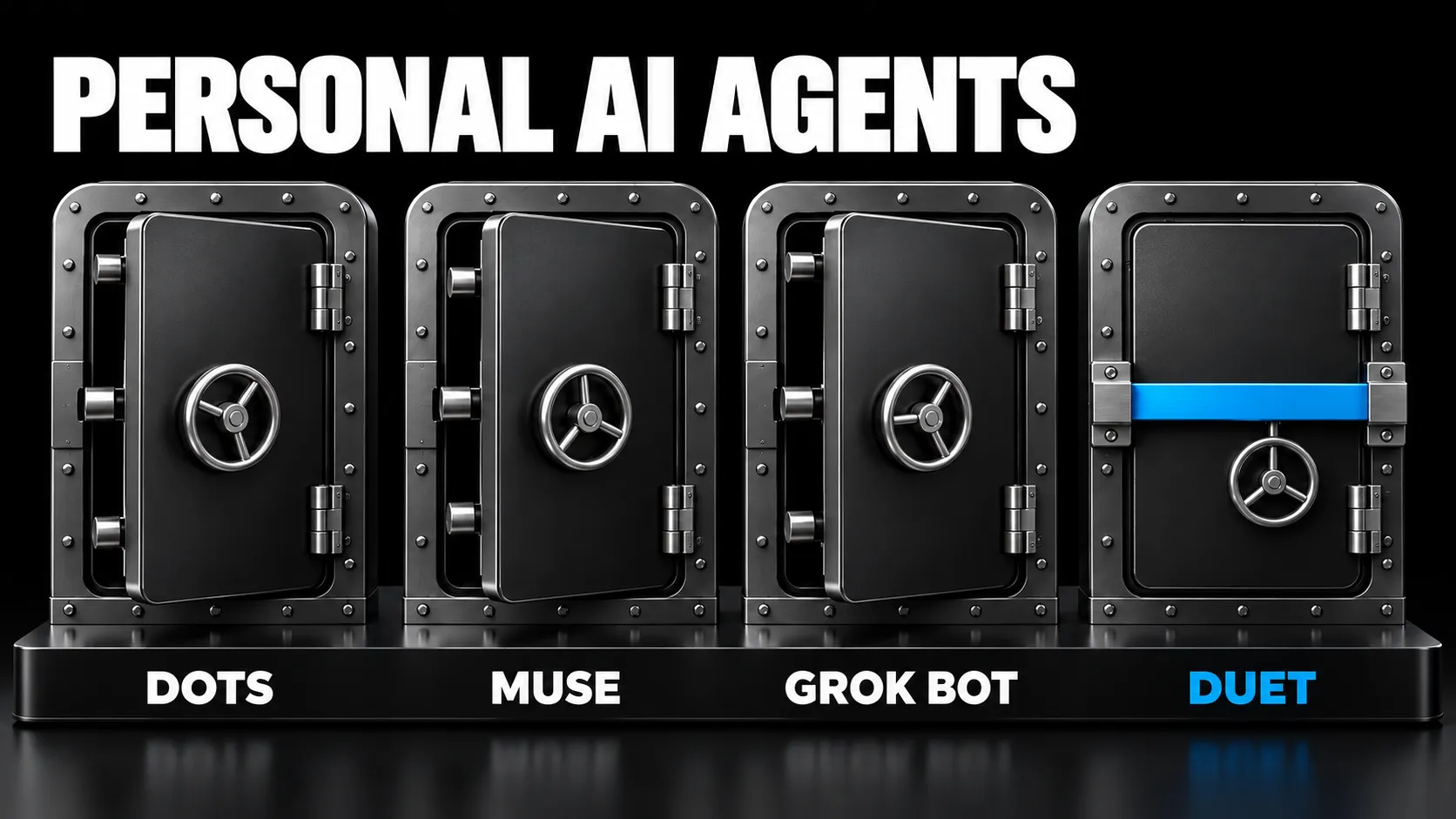
Personal AI agents stopped being a demo this autumn. Between August 11 and October 21, 2026, xAI shipped Grok Bot, Meta shipped Muse, OpenAI shipped Dots and Anthropic opened a preview of Claude Duet. All four now share the same design: a cloud computer, connected apps, memory, and an approval step. So the useful question is no longer which model is smartest. It is where each agent draws the line between acting and asking, and what it keeps about you.
I came to that view the boring way. I built a content system that runs Claude headless, with nobody watching, and the thing I spent the most time on was not the prompt. It was a guard that fences every file write to one folder and blocks git, deploys and the publishing APIs outright. The model never gets to decide whether it may publish. A review screen decides. That guard is a crude, homemade version of exactly what these four companies are now selling, and building it taught me which parts matter.
What is a personal AI agent, and why are all four suddenly the same?
A personal AI agent watches your connected apps, decides what needs you, and does tasks on your behalf, often while your laptop is closed. Claude Duet, OpenAI Dots, Meta Muse and Grok Bot each run on a dedicated cloud computer, plug into your accounts, keep memory between sessions and ask before at least some actions.
That convergence is the story the creator coverage keeps circling. Anthropic describes Duet as an agent that “comes to you with what needs your attention, completes tasks you ask of it, keeps working even when you step away, and checks with you before it acts on your behalf.” Anthropic. Swap the brand name and that sentence describes all four.
Economists have a name for the problem this creates: the principal-agent problem. Once you hire someone to act for you, the cost moves from doing the work to monitoring it. A personal agent is a principal-agent arrangement with software on the other side. The four products are mostly competing on how cheap they make the monitoring.
How do Claude Duet, Dots, Muse and Grok Bot compare?
They differ on audience, on where the approval line sits, and on how memory and data are handled. Duet targets professionals and publishes hard action limits. Dots separates read-only research from actions. Muse is a free consumer agent inside WhatsApp with a separate approving agent. Grok Bot is a team of named workers sharing one computer.
| Claude Duet | OpenAI Dots | Meta Muse | Grok Bot | |
|---|---|---|---|---|
| Launched | Oct 21, 2026 (research preview) | Sep 29, 2026 | Sep 8, 2026 | Aug 11, 2026 (beta) |
| Built for | Professionals, small business owners | ChatGPT users with ongoing goals | Everyone, via app and WhatsApp | Real work, run as parallel “teammates” |
| Runs on | Its own VM and browser | Its own cloud computer | Muse Secure VM | One persistent cloud computer per account |
| Approval line | Shows the exact action and waits before messages, payments, signatures, deletions | Background research is read-only; actions go through Custom Rules and Auto-review | A separate Sentinel agent approves anything reaching the internet; asks before emails and purchases | Drafts wait for sign-off; hands blocked steps back to you |
| Hard limits | Some actions refused even with approval | Not published as a list | Not published as a list | Not published as a list |
| Access | US Pro and Max, waitlist | ChatGPT Pro, Business Premium | Free for most use, paid tiers | Paid Cursor plans, SuperGrok |
Sources: Anthropic, OpenAI, Meta, SpaceXAI docs.
Where does each agent draw the approval line?
Every agent asks before something, so the real test is what happens after you say yes. Duet is the only one of the four that publishes actions it refuses even with your approval, such as trading securities or moving money between accounts. That is a limit enforced by the product, not by your attention at the moment you tap approve.
The rest of Duet’s design follows the same idea. Before it sends a message, makes a payment, signs a document or deletes anything, it “shows you exactly what it’s about to do and waits for your approval,” and it “never directly sees your passwords or sign-in tokens.” Anthropic.
Dots splits the problem differently. Its proactive research uses read-only tools and cannot send messages or change content in connected apps; follow-up actions go through Custom Rules and Auto-review. I covered that split in what OpenAI Dots actually changes.
Muse puts a second agent in the path. “Nothing Muse does reaches the internet unless the Sentinel approves it.” Meta.
Why do hard limits matter more than approval prompts?
A confirmation prompt only protects you while you read it carefully, and people stop reading prompts they see every day. A limit written into the product holds no matter how tired or rushed you are. That is why I weigh published refusals above any approval flow.

My bias comes from my own system. The guard that blocks publishing there does not care how confident the run is, or how sensible the output looks. I trust a refusal written into code more than a confirmation prompt I will learn to tap through by the second week.
What does each personal AI agent remember about you?
All four keep memory across sessions, and that memory is where most of the privacy risk lives. Muse has drawn the sharpest scrutiny: TIME reported it updates profiles of users and the people they mention every hour. Duet withholds the most sensitive data by default. Grok Bot keeps memory per Bot but shares one computer.
On Muse, TIME’s October 6 analysis of its internal files found hourly dossiers that record how a user’s contacts met, their disputes and their “tensions and alliances.” It also found that asking Muse to “forget” something does not necessarily erase the original message. Meta did not dispute the findings and said the files are visible by design. TIME. Meta’s own position is that Muse data does not go to its ad systems and users can opt out of training. Meta.
The people in those dossiers never signed up. Researchers call this second-hand privacy harm: your permissions let an agent infer things about friends and colleagues who never consented. ACM, 2026.
Duet takes the opposite default. A classifier is built to reject sharing card numbers and government ID, and health or personal finance data is shared only on explicit instruction. Anthropic.
Is the shared computer behind Grok Bot a problem?
Grok Bot’s shared computer is a problem only if you treat separate Bots as separate security zones. SpaceXAI’s docs say every Bot on an account shares one persistent computer, with files, browser sessions and logins reused across Bots, and tell you to treat anything on it as available to every Bot you run.
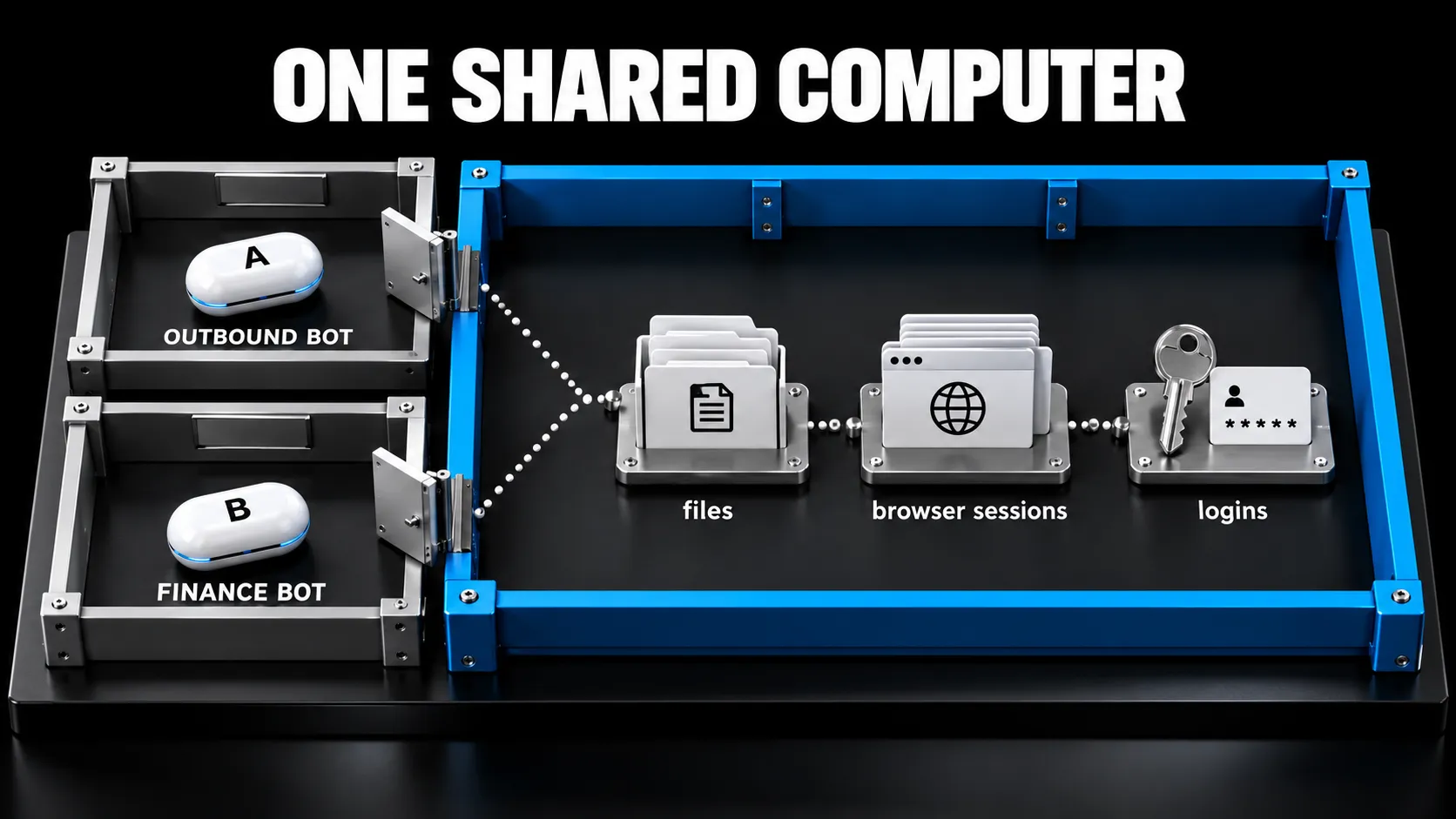
That is an honest warning, and I respect it more than marketing that implies isolation. The convenience is real: handoffs between Bots need no setup. SpaceXAI docs.
The consequence is just as real. Say you spin up one Bot for outbound sales and another for finance. The finance logins sit where the outbound Bot can reach them. The right mental model is one employee with several job titles, not a team of separate people.
I hit the same trade-off in my own setup. Every headless run gets its own folder, partly because one run reading another run’s leftovers is a bug that looks like intelligence until it bites.
Are personal AI agents safe to use yet?
Safe enough for scoped work, not safe enough for unscoped trust. Howdy.com surveyed 1,006 US adults in October 2026. Among the 207 who use agents, 64% had connected their email, 20% caught their agent accessing information they had prohibited, and 13% found an unauthorized purchase.
The number in that survey that worries me most is a different one: 32% of agent users did not know whether their agent runs locally or on company servers. Howdy.com. You cannot reason about a permission model you have not looked at.
There is a hopeful signal in the same data. 42% of agent users have already reduced their agent’s access since starting. People are learning to scope these tools by getting burned, which is the expensive way to learn it.
Adoption is not waiting for that lesson either. Sensor Tower data reported by CNBC shows Muse reached 9 million US downloads in 36 days, against 670 days for Claude. CNBC.
Which personal AI agent should you pick?
Pick the permission model you can live with, then the ecosystem you already use. For business work across SaaS tools, Duet has the strongest published limits. For research-heavy recurring work inside ChatGPT, Dots. For personal errands through WhatsApp, Muse. For parallel workers on a Cursor plan, Grok Bot.
My shortlist, with the reason behind each:
- Claude Duet if your day lives in Gmail, Slack, QuickBooks, Stripe or HubSpot. Anthropic says it is built around work and weaker at personal errands like booking tickets, and that background checks count against your plan’s usage limits. Anthropic.
- OpenAI Dots if you already pay for ChatGPT and want an agent that researches in the background without being able to act on what it finds.
- Meta Muse for household admin, but open its memory files in the first week and see what it has written about the people in your life.
- Grok Bot if you want several named workers in parallel and are disciplined about what sits on the shared computer.
What I would not do with any of them: connect a client’s inbox, a payroll tool or a bank account in month one. The bigger risk in that first month is my own habit of approving things quickly.
I would change this view under one condition. If independent testing shows one agent is meaningfully better at judgment on long, messy tasks, capability would matter more than the permission model. Today the published evidence is about approval rules and memory, so that is what I am choosing on.
How should you roll out a personal agent safely?
Start read-only, give the agent one recurring responsibility, and widen access only after it proves itself on output you can check. Keep anything that sends, pays, signs or deletes behind an approval you actually read. Review its memory monthly.
The rollout I would run:
- Week one, read-only. Connect calendar and email with no send rights. Judge the morning brief on one question: did it surface something I would have missed?
- One responsibility. Give it a single recurring job, such as pre-call briefs, rather than “handle my inbox.” Broad mandates make failures impossible to trace. I explain why in AI agent vs automation.
- Drafts before sends. Let it write replies you approve. Count how many go out unedited.
- Memory audit. Ask what it remembers about you and about the people you work with. Delete what it should not keep.
- Then widen. Add one write permission at a time.
The test is the one I use on my own pipeline: is the work left for me smaller than the work I handed over?
Frequently asked questions
What is a personal AI agent?
A personal AI agent is software that watches your connected apps, decides what needs attention and carries out tasks for you, often while you are away. Claude Duet, OpenAI Dots, Meta Muse and Grok Bot all run on their own cloud computer and ask for approval before at least some actions.
Which personal AI agent is best for a small business?
For work across business apps, Claude Duet is the closest fit on paper: Anthropic built it for professionals and small business owners, it connects to tools like QuickBooks, Stripe and HubSpot, and it blocks some money movements outright. It is a waitlisted research preview, so OpenAI Dots is the practical option today if you already pay for ChatGPT Pro or Business Premium.
Are personal AI agents safe to give my email to?
They can be, if you treat access as something you grant in stages. In Howdy.com’s October 2026 survey, 64% of agent users had connected their inbox and 20% had caught their agent accessing information they had prohibited. Start with read access, keep sending behind approval, and check what the agent remembers.
Does Meta use Muse conversations for ads?
Meta says Muse does not share conversations or the data in a person’s virtual machine with its ad systems, and that users can opt out of training. TIME reported in October 2026 that Muse keeps hourly profiles of users and the people they mention, which Meta did not dispute.
Can these agents spend money without asking?
All four describe an approval step before sensitive actions such as purchases. Duet and Muse pay through Stripe’s Link wallet, which uses a virtual or one-time card. Duet goes further and refuses some actions, such as moving money between accounts, even with approval.
The agent race is a trust race
The model race made AI smarter. The agent race decides who you let act for you, and you make that call on trust. All four companies have converged on the same machine. They have not converged on what it is allowed to do or what it keeps.
Before you join a waitlist, read the approval rules and the memory policy of the agent you want, and write down the one task you would hand it first. If you cannot name a limit you want it to have, you are not ready to give it the keys.
Newsletter
New notes, in your inbox.
Get each new article from the workbench by email. No spam, unsubscribe anytime.
Related reading
Continue through the system.
-
Always-on AI agents: what OpenAI Dots actually changes
Always-on AI agents can carry work between conversations. Learn what OpenAI Dots changes, where agent computers help, and how to run a useful pilot.
Read article → -
Meta Muse Wonder and Wonder Full: the comeback test
Meta Muse Wonder and Wonder Full bring stronger agent models. Compare access, memory, benchmarks, pricing, and the workflow test I would run.
Read article → -
88 Skills, 194 Decisions Logged, One AI System That Actually Runs My Business
I stopped chatting with AI and built it an operating system: 88 skills, a second brain, and 194 logged decisions.
Read article →