▪ Case studyAI operations hub
Nexis OS
Apps that report on themselves
- Timeline
- Ongoing
- Services
- AI operations hub
01Challenge
Ten good apps, ten tabs to check
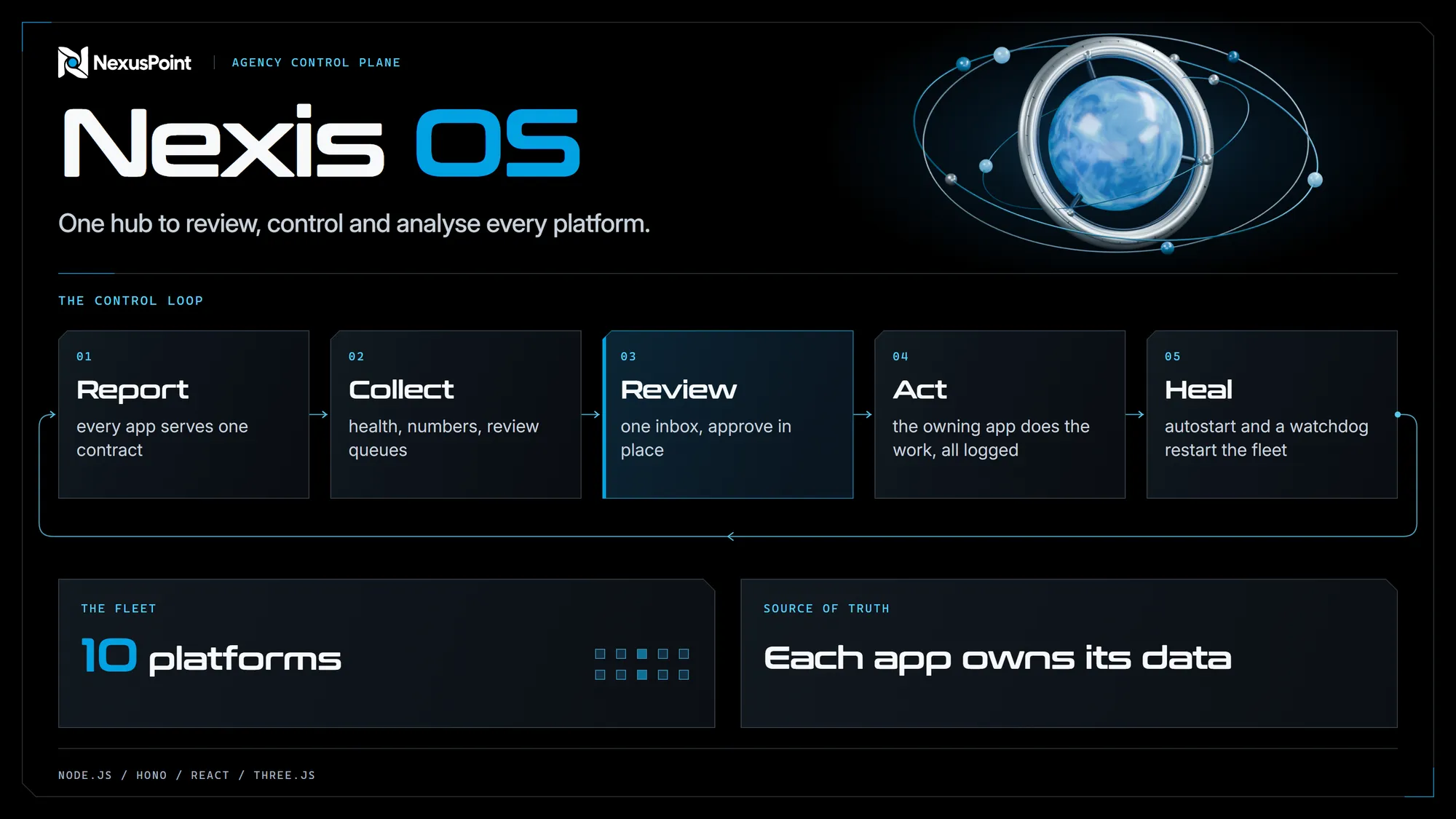
By late 2026 the agency ran on ten local platforms, each owning one stage of the business. Each was useful on its own. Reviewing the day still meant opening every one of them, and the first hub built to tie them together read their files directly, so it broke every time an app changed.
- 01Scattered approvals
Drafts, replies, follow-ups and alerts waited in ten different queues.
- 02Fragile glue
A hub that reads other apps' internals breaks with every change to them.
- 03Manual upkeep
Some apps started at sign-in and some did not, and a crashed one stayed down until someone noticed.
02Goal
Apps that report on themselves
Nexis OS is the control plane. Every platform now serves the same small contract describing its health, its numbers, what is waiting for review and what it can run, so the hub never touches another app's data.
- 01Review
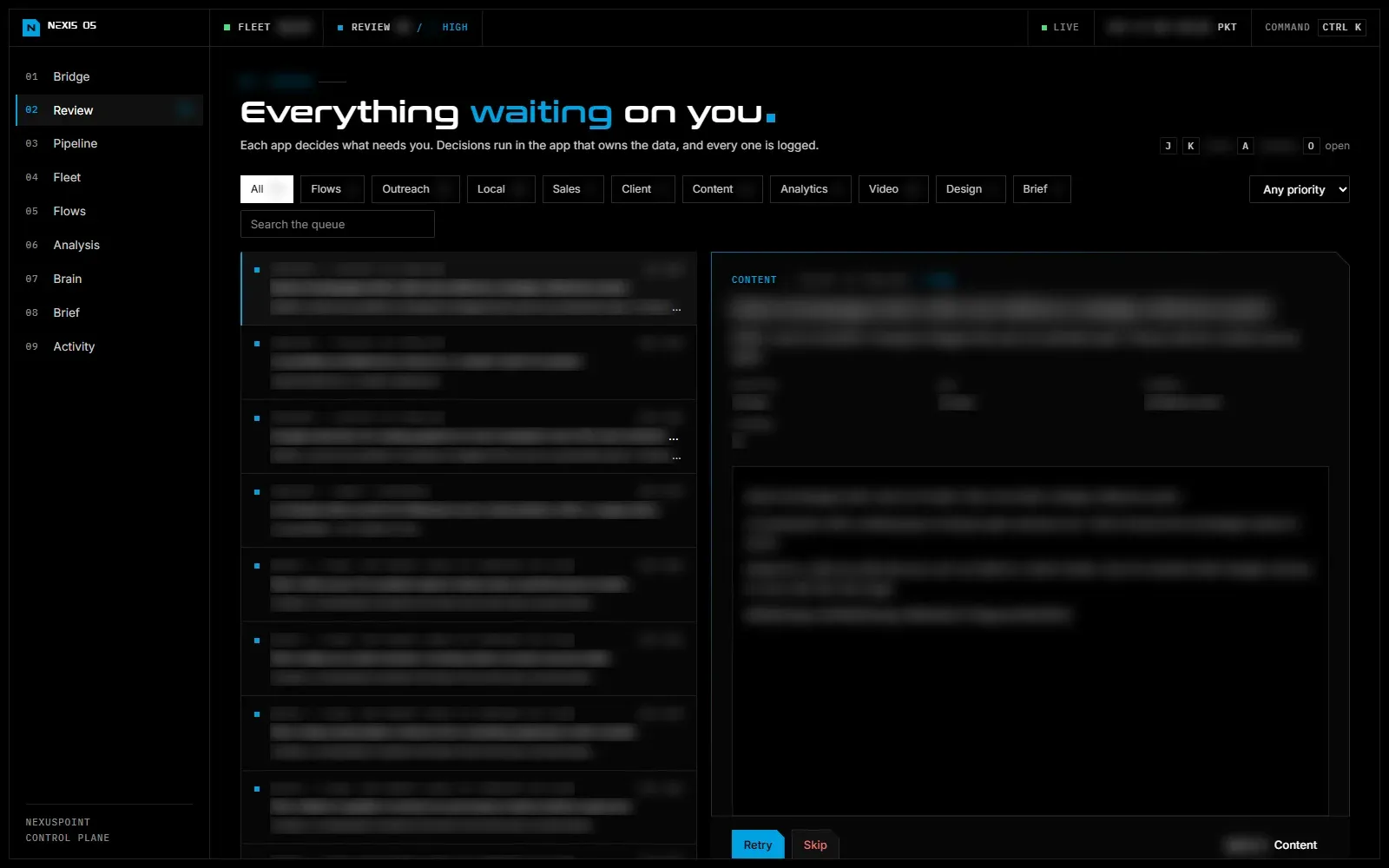
One inbox across all ten apps. Approving runs the action inside the app that owns it, and every action lands in an append-only audit log.
- 02Fleet
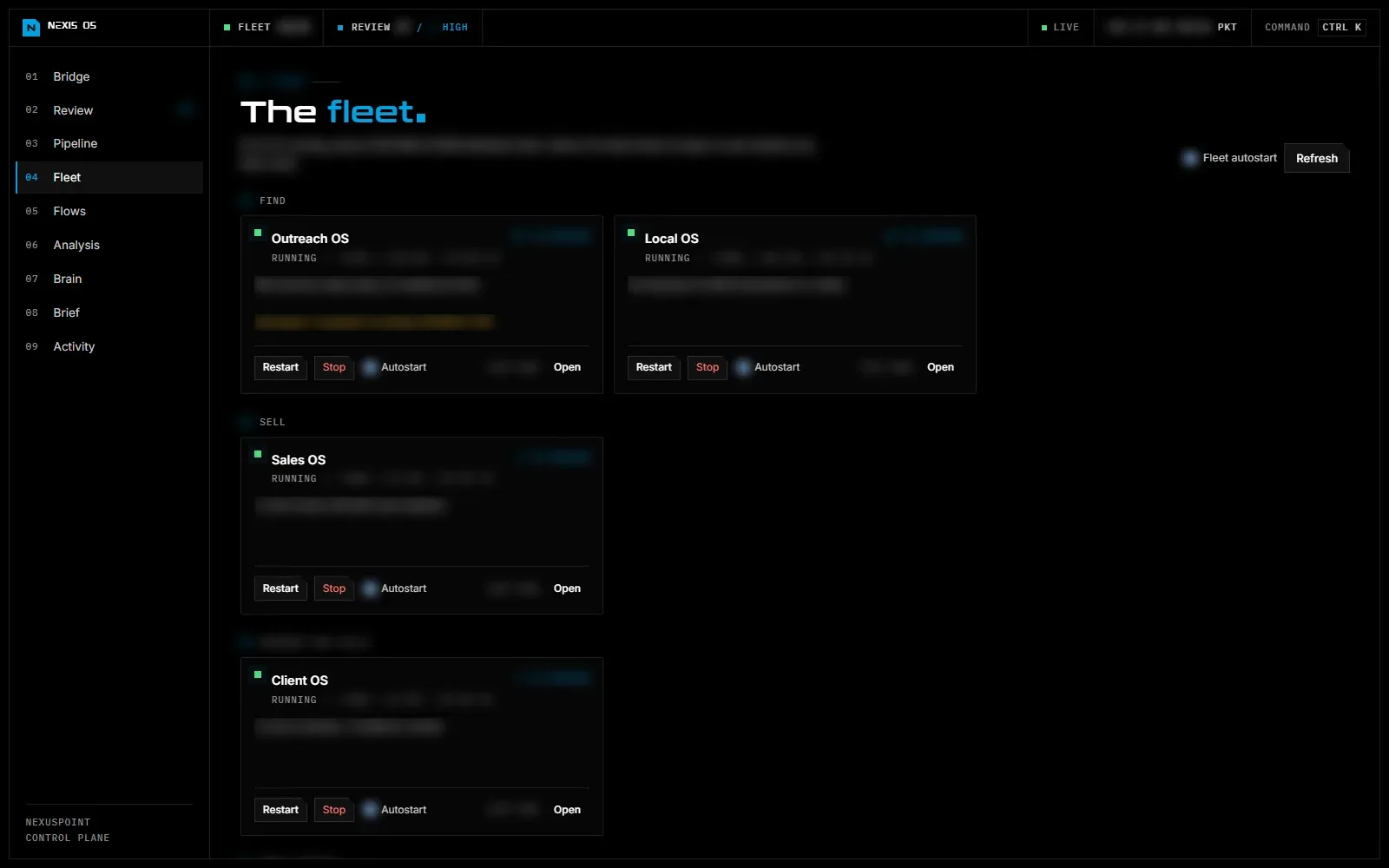
Health, memory and uptime per app, with start, stop and restart. It starts the fleet at sign-in and brings back anything that crashes.
- 03Flows
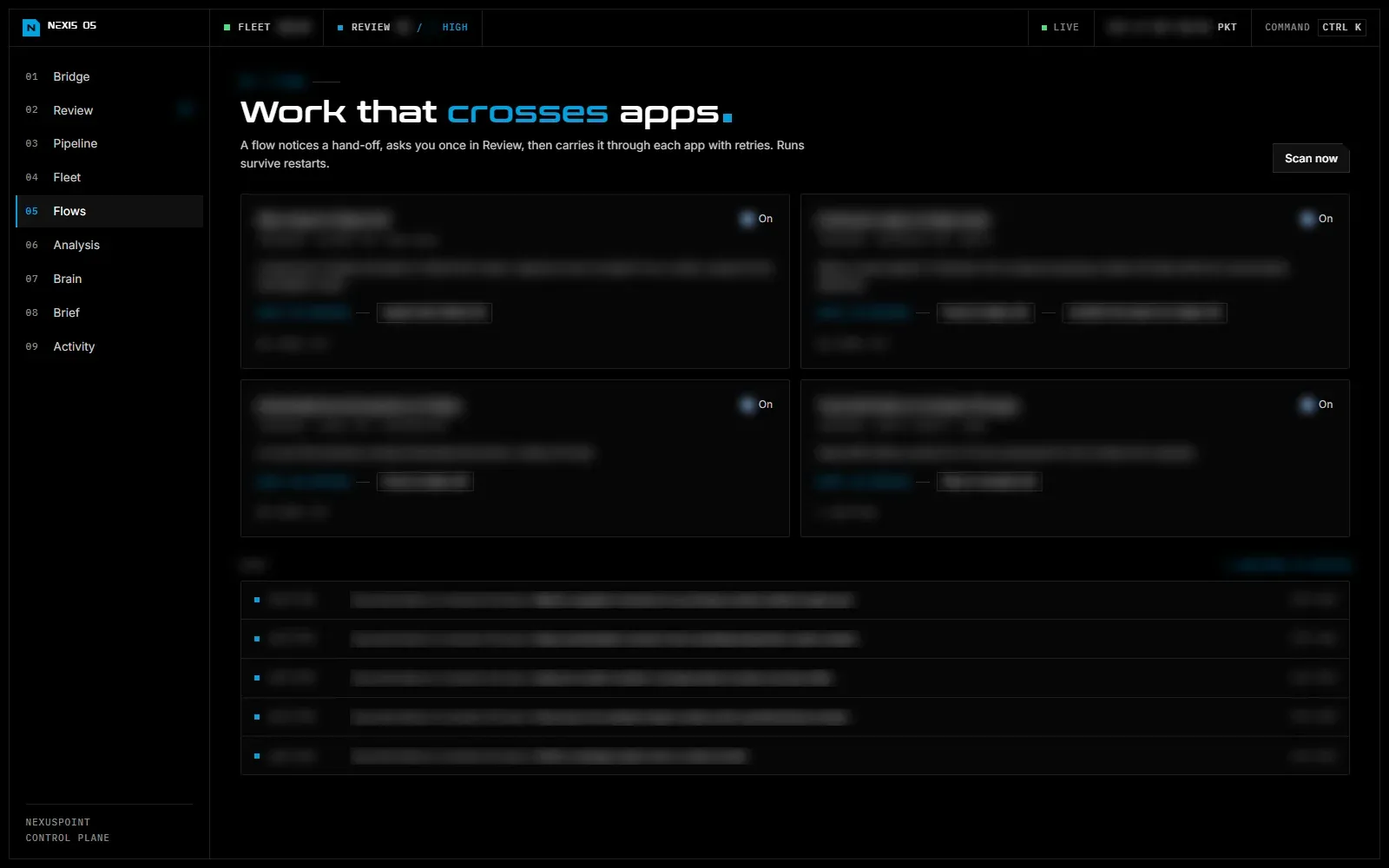
Hand-offs between apps, such as a reply becoming a deal or a win becoming a client, ask once and then run with retries.
- 04Analysis
A funnel across systems and a weekly digest whose every number is checked against the facts it was given.
- 05Brain
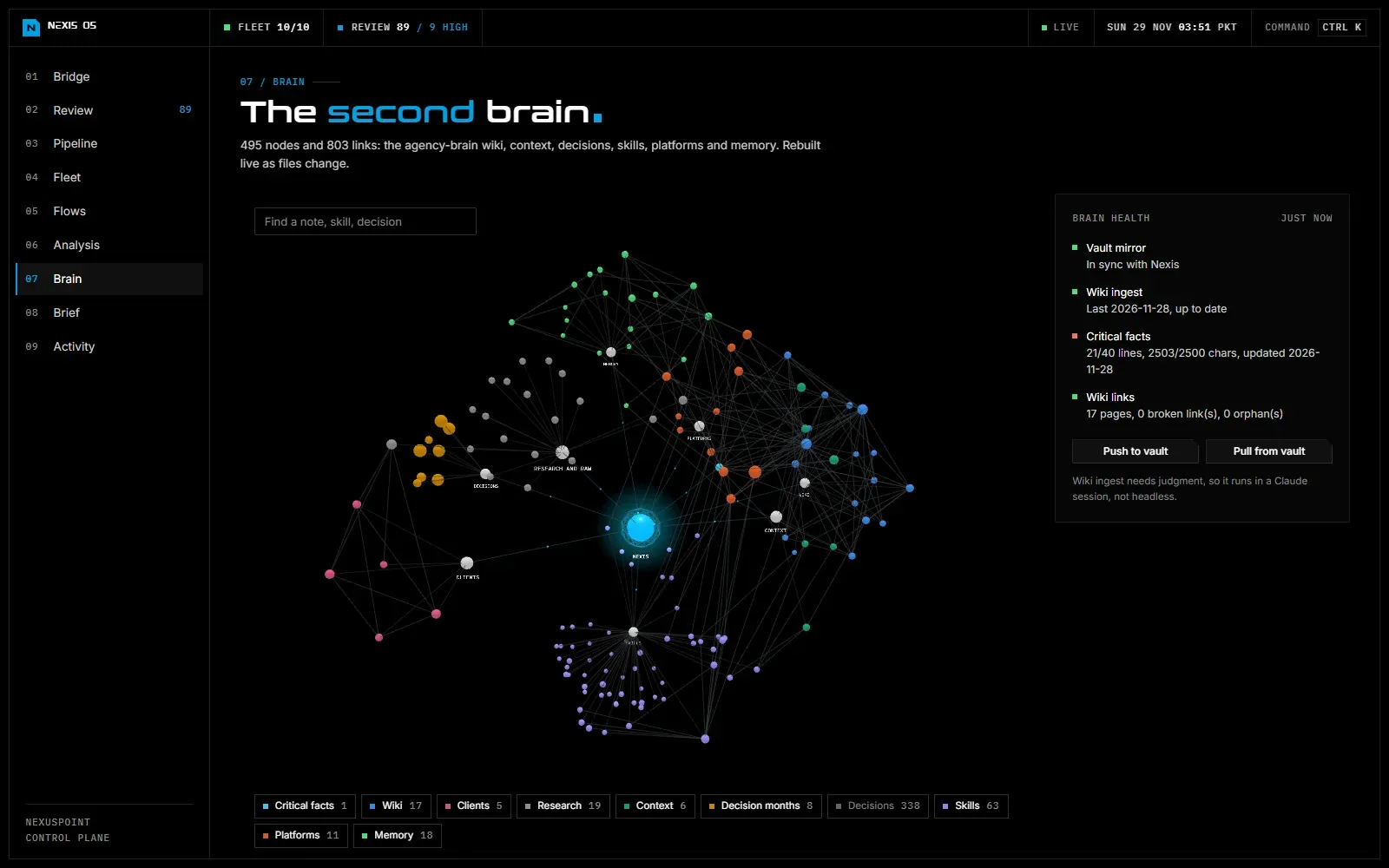
The Obsidian second brain plus context, decisions, skills and platforms as a 3D graph around one core, with health and sync.
03Result
One place to run the business
The agency now runs from a single screen. When an app changes, the hub keeps working, because the contract is the only thing they share. Every app passes a live conformance check, and the whole fleet runs on about a gigabyte of memory.