Claude Opus 5.5: What Creators Are Making
Claude Opus 5.5 is helping creators build games, videos, and interactive projects. Here is what changed, what examples show, and where review matters.
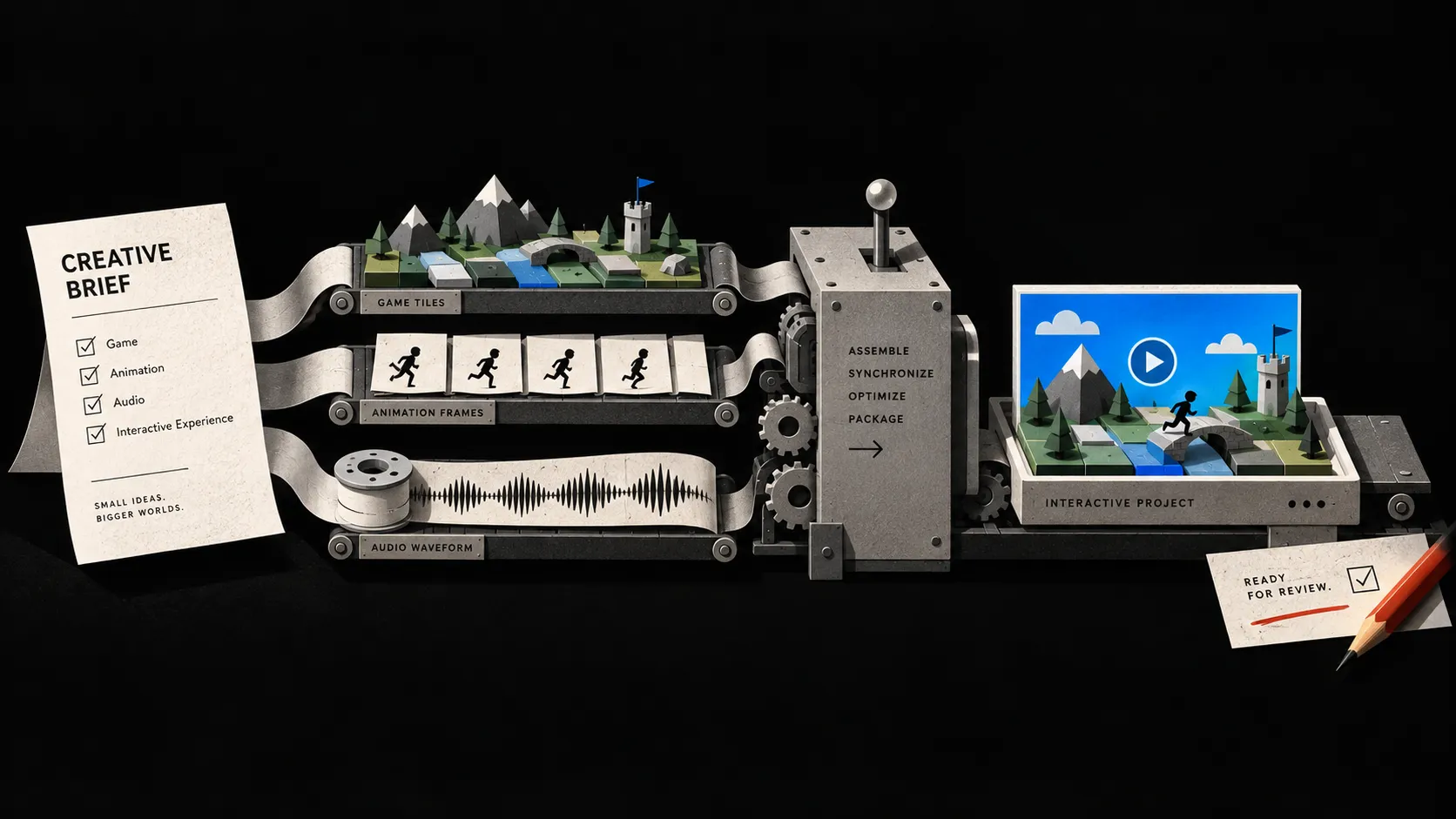
I built a Reel Engine that turns one infographic into a short motion graphic. The work is not just writing a script. It has to connect the scene plan, visuals, voiceover, word-level captions, animation timeline, and final render. If one line changes after the audio is recorded, the whole chain can drift.
That is how I look at Claude Opus 5.5. The interesting jump is not that it can produce a prettier first draft. It is that a stronger coding model can stay useful across more of the steps between an idea and a working creative project. People are already using it to build playable games, interactive experiences, and rendered videos. Those examples are exciting. They also reveal how much work still sits outside the prompt.
What actually changed with Claude Opus 5.5?
Anthropic released Opus 5.5 on September 22, 2026. Its announcement positions the model as better at long coding tasks, knowledge work, and following writing instructions. On Anthropic’s Terminal-Bench 4.0 results, it scored 66.4%, compared with 52.3% for Opus 5. On CursorBench 4.0, the reported scores were 57.8% and 46.6%. These are vendor-reported evaluations, with different effort settings and normal benchmark uncertainty. They show a meaningful signal, not a guarantee that your project will improve by the same percentage.
The cost story matters too. Anthropic lists API prices of $4 per million input tokens and $20 per million output tokens, down from $5 and $25 for Opus 5. It says fewer tokens per task bring typical task cost down about 40%. That is a company estimate for its workloads, not a promise for every creator. A long agent session can still be expensive if it loops through weak ideas or keeps redoing assets.
For me, the practical gain is continuity. A creative build can require research, software architecture, writing, design decisions, rendering, and debugging. Every handoff is a chance to lose the original intent. The more of that chain a model can handle coherently, the more useful it becomes. I made a similar point when documenting my 19-document marketing system: the output improves when each artifact inherits the decisions above it.
What are people actually making?
Early examples are more useful than a benchmark screenshot, as long as we read them carefully.
A playable world
One creator shared Willowmere, a cozy, playable 3D pixel-art game with quests, fishing, decorating, and a lighthouse story. They say they used Opus 5.5 through Claude Code over roughly two and a half five-hour sessions. In the comments, they describe a JavaScript and Three.js build rather than a conventional game engine.
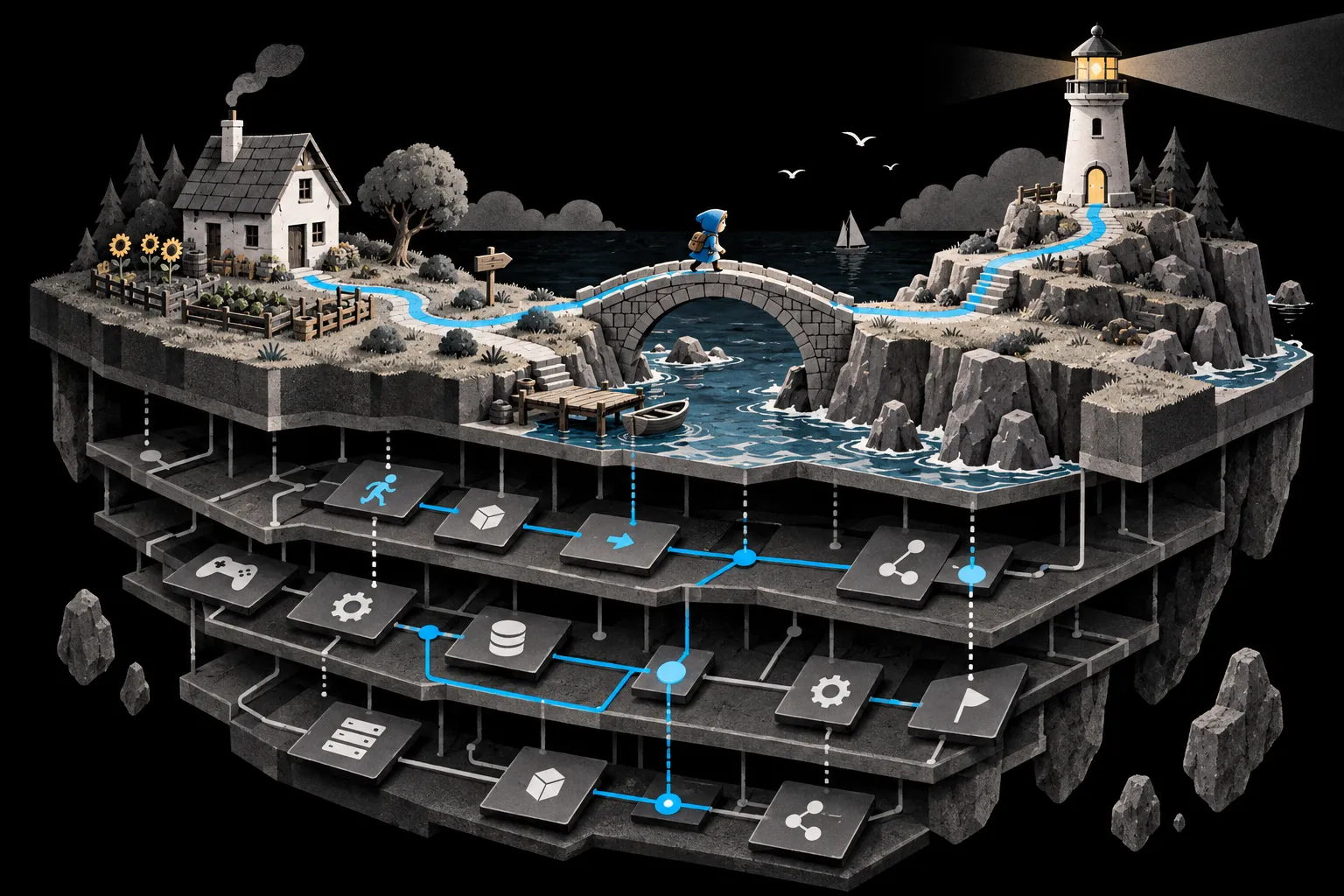
That is a striking amount of output from a short creative brief. It is also a self-reported build, not an independently audited test of how much was finished, original, or maintainable. Some players immediately questioned similarities to Stardew Valley. That is exactly the kind of issue a creator must assess before calling a generated project ready to ship.
A produced explainer
Another builder described an explainer video workflow for Friendr. Claude Code reportedly developed the concept and script, coordinated collage artwork, voice, music and sound effects, wrote Canvas animation code, synchronized the beats, and rendered an MP4. The creator said the external API bill was around $4, with a spending cap. The useful detail is the chain: Opus did not simply emit a finished video file from its own weights. It coordinated code and other services. The cost and quality are the builder’s account, not a reproducible benchmark.
An interactive art piece
A third example is Belfry, an interactive bell-tower experience in which visitors can select and ring bells. It is a smaller project than a game, but that is precisely why I find it interesting. Stronger models lower the friction of building odd, personal, interactive ideas that might never justify a conventional development budget.
These examples point in different directions: a playable world, a produced video, and an interactive art piece. The common thread is that the model is helping assemble a system, not merely supplying a paragraph of copy.
The creative workflow behind the demo
When someone says a model “made a video,” I want to know what that sentence includes. Did it write the script? Generate images? Call a voice service? Produce animation code? Render and inspect the output? Each step has different failure modes and costs.
In my Reel Engine, the script and scene data drive the voiceover and Remotion animation. Captions need to match the spoken words exactly. The timeline must leave enough room for each scene. A model that can edit the code, trace those dependencies, and rerender after a change would be valuable. But the final test is still a real playback: does the point land, is the pacing right, and does the visual say what the narration says?
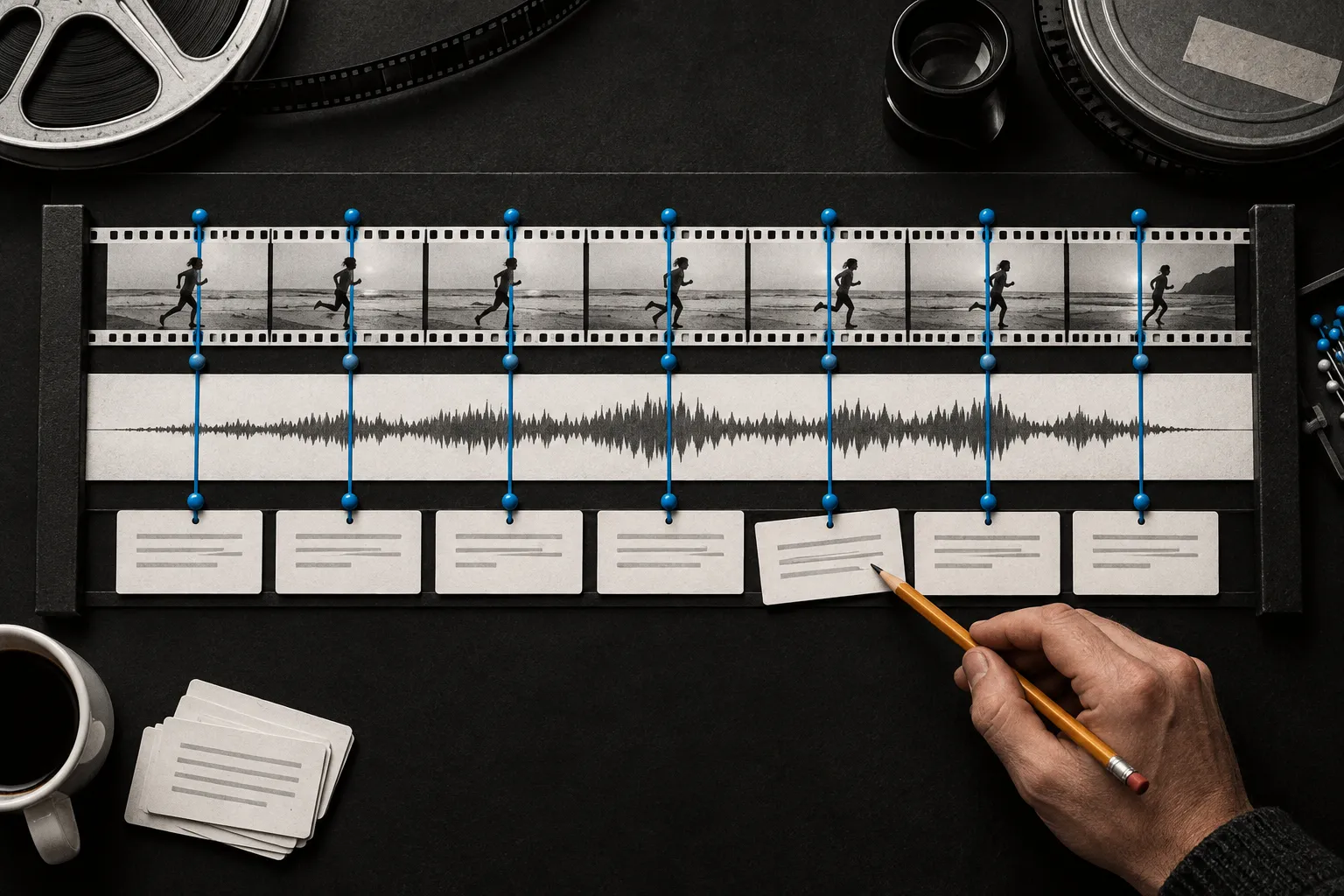
The same applies to a game. A model can write movement systems, dialogue, UI, and procedural art. The creator still has to play it, check originality, find broken states, and decide whether it is fun after the first minute. A self-scored “8.5 out of 10” in a prompt is not a substitute for players.
The strongest use of Opus 5.5 may be as a capable production partner inside a defined workflow. Give it an approved brief, source material, a repository, a way to render or run the result, and concrete acceptance tests. Let it work across the steps. Then inspect the actual artifact.
Where I would put the human checkpoints
I would use four checkpoints for any public-facing creative project:
- Direction. Define the audience, the point of view, references, and what must feel original. A vague prompt can produce a plausible copy of a familiar pattern.
- Build contract. Specify deliverables and dependencies. For a video, that might mean script, scene plan, audio, captions, source project, and final render. For an interactive page, it might mean accessible controls, responsive behavior, and a working deployment.
- Acceptance test. Run the thing. Watch the video with sound. Play the game. Click every state. Check facts, permissions, attribution, and brand fit.
- Cost boundary. Set a spend or time limit before an agent starts generating assets, calling services, and revising itself. Compare cost per approved artifact, not cost per token alone.
This is also why I would not publish straight from an agent session. More capable models can produce more convincing mistakes. An attractive result can hide weak sourcing, copied design language, awkward pacing, or code that becomes painful to maintain.
Should creators switch to Opus 5.5?
Run a bounded test on work you actually do. Give Opus 5.5 and your current setup the same brief, assets, constraints, and finish line. Measure time to the first approved artifact, revision count, total tool/API cost, and how much manual repair was required. If Opus 5.5 wins on those measures, use it for that class of work.
I would start with projects where the output has several linked parts: a landing page with interactions, a short video with synchronized media, or a small tool that needs code and copy to agree. For a repeatable template with fixed rules, a cheaper model or an ordinary automation may still be the better choice. My earlier agent-versus-automation guide explains that distinction.
The promise of Opus 5.5 is not that taste, direction, and review disappear. It is that a creator may now be able to explore and finish ideas that previously died between the brief and the build. That is a real capability jump, provided the finished work survives inspection outside the chat window.
FAQ
Can Claude Opus 5.5 generate a finished video by itself?
It can write scripts and code, coordinate other tools, and help render a video. A workflow may still need image, voice, music, or rendering services. Check the exact tools used before calling any example “made by Opus alone.”
Is Opus 5.5 guaranteed to cost 40% less than Opus 5?
No. Anthropic reports roughly 40% lower cost for its typical tasks because of lower token prices and token use. Your cost depends on task length, effort setting, retries, and external tools.
What kinds of creative projects are people building with it?
Public creator reports include browser games, animated explainers, and interactive art. These show possibilities, but they are self-reported examples rather than controlled comparisons.
What should a creator test before publishing an AI-built project?
Test the real output for function, originality, factual accuracy, pacing, accessibility, rights, and maintenance. Ask a person who did not write the prompt to use or watch it.
Newsletter
New notes, in your inbox.
Get each new article from the workbench by email. No spam, unsubscribe anytime.
Related reading
Continue through the system.
-
GPT-6 Astra Is a Capability Leap. The Workflow Is Still the Product.
GPT-6 Astra can carry more work across browsing, computer use, and creation. The advantage now comes from supervised creator and agent workflows.
Read article → -
Always-on AI agents: what OpenAI Dots actually changes
Always-on AI agents can carry work between conversations. Learn what OpenAI Dots changes, where agent computers help, and how to run a useful pilot.
Read article → -
Jev Judgment Models Are Fast. That Does Not Make Them Better Than LLMs.
Jev judgment models make fast, typed decisions inside software. Learn where they beat LLMs, where they do not, and how to test them safely.
Read article →