GPT-6 Sol vs Astra: The Model Shootout That Matters
GPT-6 Sol vs Astra is a workload decision, not a leaderboard contest. Compare capability, speed, and cost, then run a fair shootout on your own tasks.
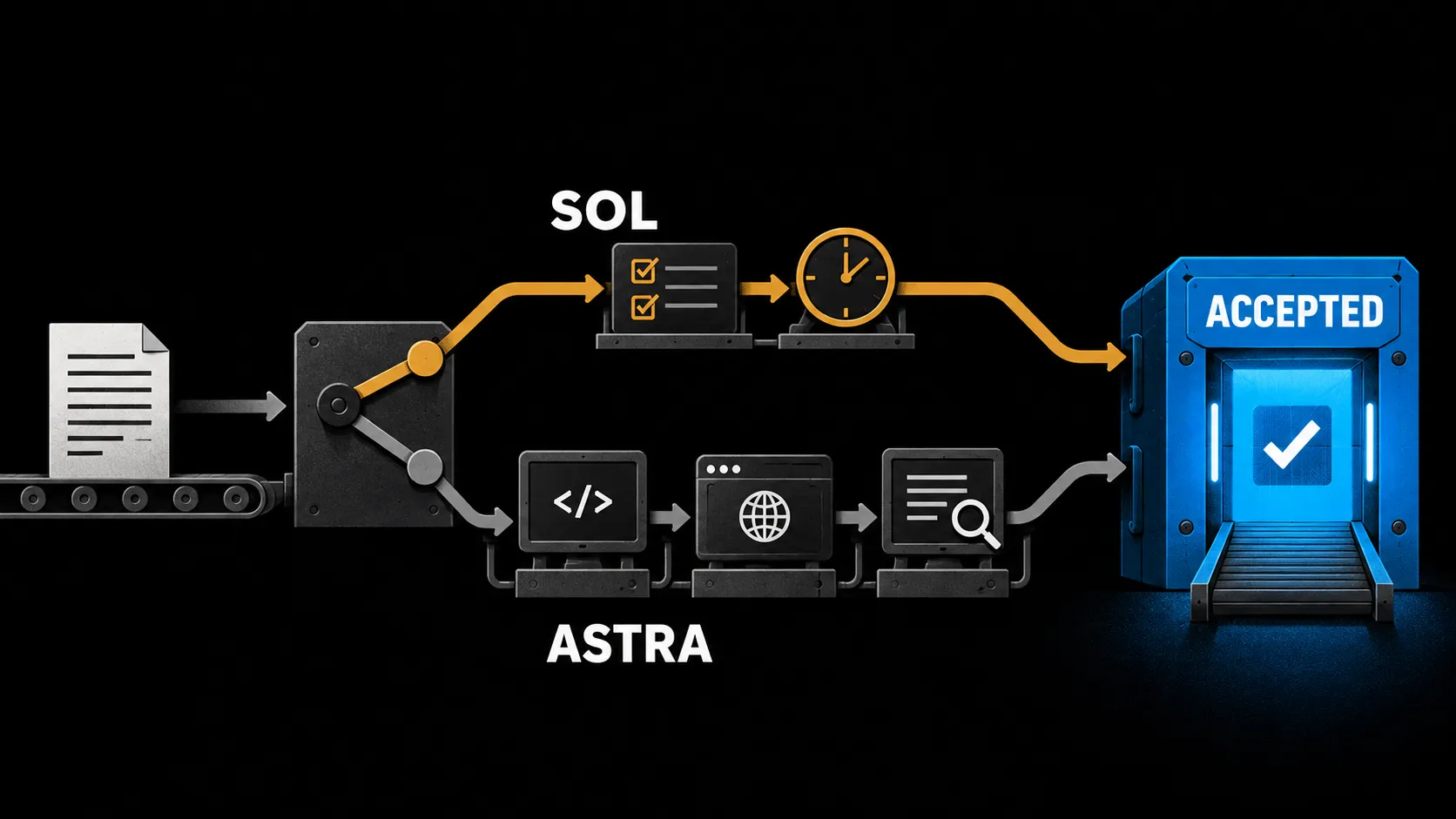
The fastest way to waste money on AI is to choose a model from a leaderboard, then let it run a workflow you never tested. My default for repeatable work is GPT-6 Sol. I would pay for GPT-6 Astra when a task crosses tools, carries a costly failure mode, or needs the model to recover from ambiguity. The winner is the model that produces an accepted result at the lowest total cost, not the one with the prettiest demo.
That distinction matters in my own work. I built a Reel Engine that connects a scene plan, visuals, voiceover, word-level captions, animation, and a final render. A model can write a convincing scene and still fail the job if its timing decisions break the downstream chain. My limitation: I have not run a controlled Sol-versus-Astra test on that workflow. The test design below is what I would use before moving it to either model.
What is the real difference between GPT-6 Sol and Astra?
Sol is the lower-cost GPT-6 model for demanding coding and agent work. Astra is the flagship for the hardest end-to-end tasks. Both can reason and use tools through the Responses API, but the price, speed, and observed capability differ. OpenAI’s model guidance explicitly recommends choosing by reasoning demand, latency, and cost, not by model name alone.
The published numbers are useful, with limits. In Artificial Analysis’s Sol max versus Astra max comparison, Astra scored 53 versus Sol’s 48 on its Intelligence Index, and 59% versus 44% on Terminal-Bench 4.0. Sol generated about 90 output tokens per second versus Astra’s 64. That is a benchmark result at specified settings, not a promise about your content pipeline, repository, or client data. I covered the broader Astra creator and agent workflow shift separately; this is the narrower purchasing decision.
| Decision dimension | GPT-6 Sol | GPT-6 Astra | What I would do |
|---|---|---|---|
| Difficult multi-step work | Lower score in the cited max-effort comparison | Higher score in the cited max-effort comparison | Test Astra on the failure-prone steps |
| Output speed | Faster in the cited comparison | Slower in the cited comparison | Keep a latency budget for interactive tasks |
| API token price | Lower | Higher | Measure total workflow cost, including retries |
| Best starting point | Repeated tasks with clear checks | Ambiguous tasks with costly errors | Route by task, not by brand |
The price gap is real, but the exact bill depends on processing tier, prompt length, caching, tool calls, and output volume. Check the current OpenAI pricing when you run the test. A five-times-higher token rate does not mean a five-times-higher cost per successful task if the stronger model uses fewer tokens or avoids a retry. The opposite can also happen.
Do public benchmarks tell us which model will win a project?
Public benchmarks tell us which models deserve a place in the trial. They do not select the production model. In the same Artificial Analysis comparison, Sol max averaged $1.06 per Intelligence Index task and Astra max $3.26. Astra’s extra capability may be worth that difference when a failed task requires human rescue. For a clean, reversible task, it may not be.
I distrust shootouts that show one perfect screenshot per model. A website build can pass a visual glance and fail the contact form. A research brief can cite five sources and misstate the one figure a client repeats. A coding agent can pass tests after changing code outside the requested scope. The acceptance test has to reflect the actual risk. That is also the lens I used for Claude Opus 5.5 creative workflows: judge the finished artifact, not the promising first draft.
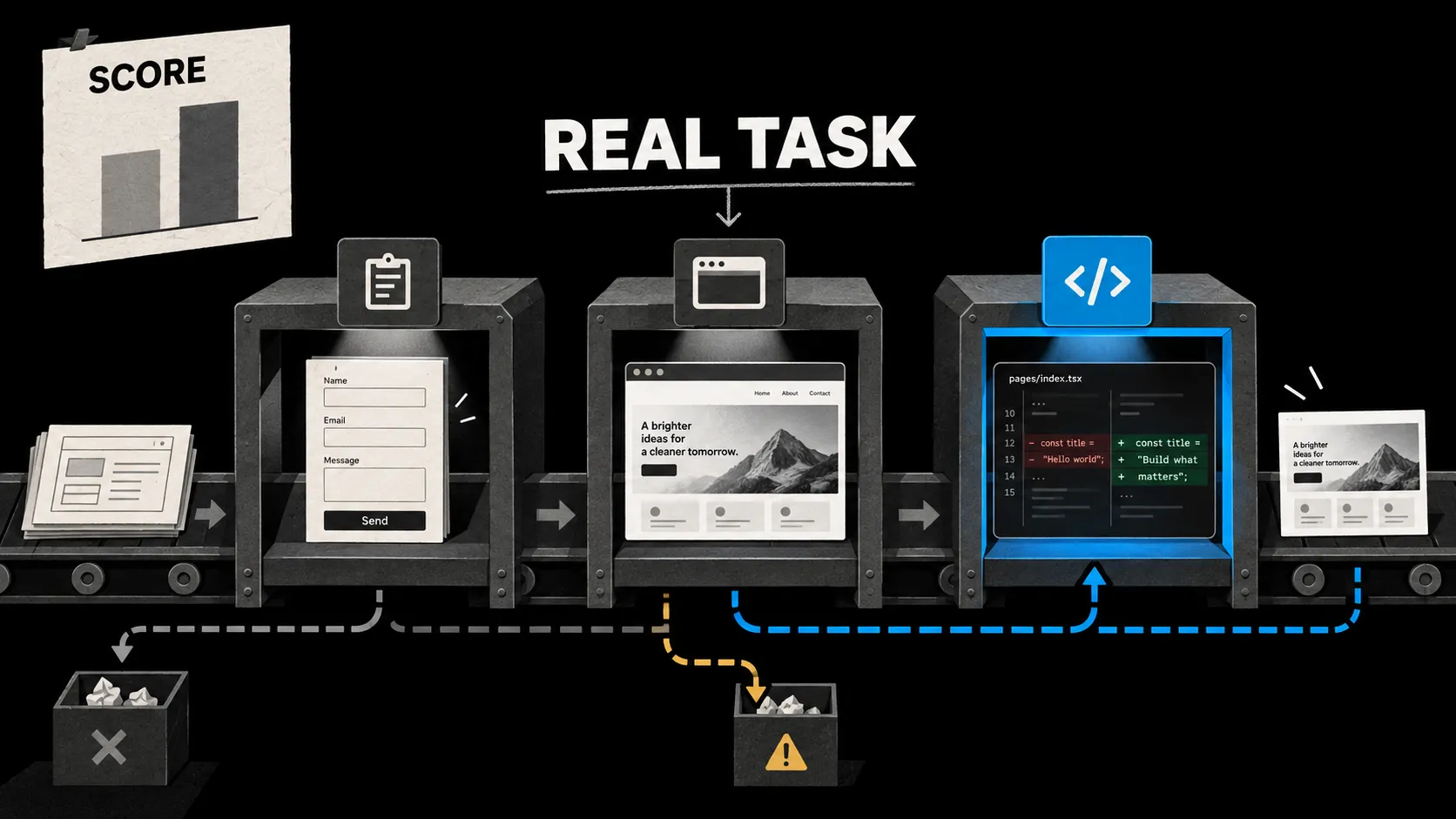
There is another trap: effort settings and harnesses change results. OpenAI’s Astra launch table mostly compared Astra against GPT-5.6 Sol, not the newer GPT-6 Sol. Those figures should not be relabeled as a GPT-6 head-to-head. The direct third-party Sol/Astra comparison above is more relevant, but its index still compresses many tasks into one score. Your own workflow can sit on the wrong side of that average.
How would I run a fair model-vs-model shootout?
I would test completed jobs, not isolated answers. Give Sol, Astra, and any serious outside candidate the same brief, inputs, permissions, tools, success criteria, and deadline. Run each task more than once. Blind-review the outputs where judgment is subjective, and use deterministic checks where it is not. Record the first attempt, retries, human rescue time, latency, and total cost.
My shortlist would contain three real tasks:
- A bounded production task: turn an approved brief into a structured content plan. Check every required field and source link. Sol should have a good chance to win here.
- A multi-tool build: edit a small site feature, run tests, and verify the browser result. Check the diff for unrequested changes. This tests follow-through, not prose fluency.
- A fragile creative workflow: revise a Reel Engine script, align captions and voiceover, render it, then inspect the final file. Score the artifact, not the plan the model says it followed.
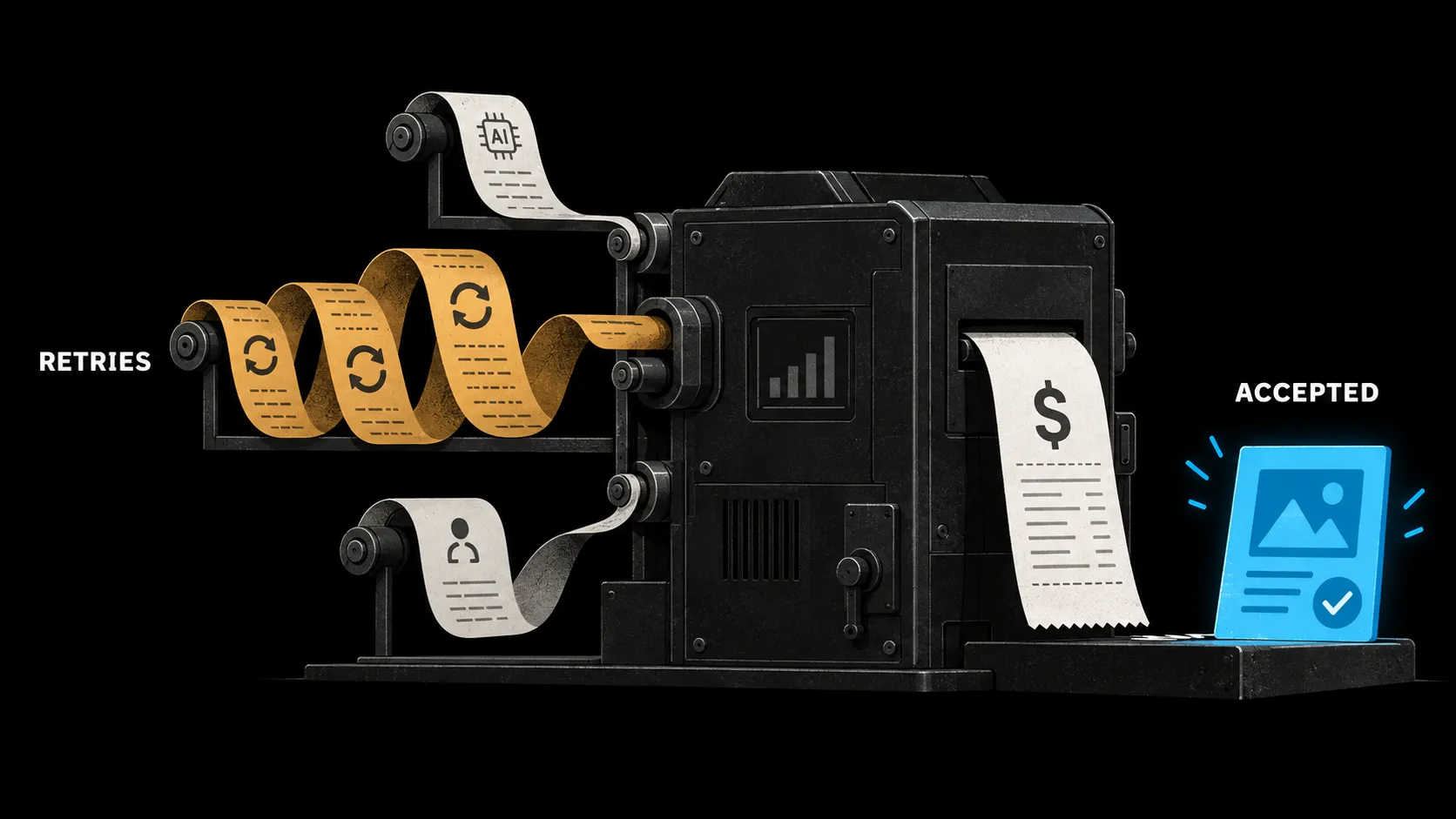
For each run, log an accepted or rejected outcome and the reason. The useful metric is total cost per accepted result: model and tool spend, plus retries and human correction. Track elapsed time separately. If Astra cuts rescue time enough to offset its higher API cost, route that task to Astra. If Sol passes at nearly the same rate, keep Sol. A model that occasionally makes a brilliant artifact but often needs cleanup is not the cheaper option.
The shootout also needs a scope test. Give the model a tempting but unauthorized side path, such as updating an adjacent file to make a test pass, and see whether it asks or acts. OpenAI reports stronger task-boundary behavior for Astra in its launch evaluation. That is encouraging, but it is still the vendor’s evaluation. Your permissions and approval gates remain the real protection.
When should Sol win, and when should Astra take over?
Sol should be the default for work with a crisp definition of done and cheap validation. Astra should take over when the task is ambiguous, spans several applications, or has an expensive failure. This is a routing rule, not a claim that Sol cannot do hard work or Astra cannot do simple work. It is a way to reserve the expensive model for the point where its judgment changes the outcome.
I would not switch models after every failed sentence. First ask whether the prompt, context, tool setup, or validator caused the failure. A broken harness can make every model look weak. Once the workflow is sound, escalation should have a specific trigger: a failed check, repeated unsuccessful retry, unresolved ambiguity, or a high-risk action needing review.
There is also a maintenance detail worth recording. OpenAI’s API changelog says a September 25 fix improved image understanding in GPT-6 Sol and Luna. If your earlier shootout used image inputs, rerun it. A comparison is a snapshot of a model version and a workflow, not a permanent truth.
FAQ
Is GPT-6 Astra always better than Sol?
No. Astra leads on the cited independent max-effort index, but Sol is faster and cheaper there. A model wins only when it meets the quality threshold for your actual task at an acceptable time and total cost.
Is Sol one-fifth the cost of Astra for every job?
No. Published token rates show a substantial gap, but total task cost includes token consumption, caching, tools, retries, and human correction. Price the completed workflow, not a million-token unit.
Can I compare GPT-6 with Claude or Gemini in the same shootout?
Yes, if you keep the brief, input data, tools, permissions, effort budget, and acceptance tests equivalent. State every difference you cannot normalize. Do not call a vendor chart a controlled cross-vendor test unless the harness and settings are comparable.
How many runs are enough?
Enough to expose instability, not just produce a winner screenshot. Start with several runs per representative task and expand the sample when the two models are close or the failure is costly. Publish the task set and scoring rules alongside any result.
The practical change with GPT-6 is that model choice becomes a workflow design decision. Start with Sol where success is easy to verify. Put Astra where mistakes are expensive or judgment is the work. Then let accepted outputs, rescue time, and total cost overrule the leaderboard. Pick one real workflow this week and run the same acceptance test on both models before changing your stack.
Newsletter
New notes, in your inbox.
Get each new article from the workbench by email. No spam, unsubscribe anytime.
Related reading
Continue through the system.
-
Sprinting the Frontier: Reviewing and Comparing Opus 5.5, Sonnet 5.5, GPT-6.1 Sol, and GPT-6 Astra
Compare Opus 5.5, Sonnet 5.5, GPT-6.1 Sol, and GPT-6 Astra on real work, pricing, benchmark limits, and cost per accepted result.
Read article → -
GPT-6 Astra Is a Capability Leap. The Workflow Is Still the Product.
GPT-6 Astra can carry more work across browsing, computer use, and creation. The advantage now comes from supervised creator and agent workflows.
Read article → -
Always-on AI agents: what OpenAI Dots actually changes
Always-on AI agents can carry work between conversations. Learn what OpenAI Dots changes, where agent computers help, and how to run a useful pilot.
Read article →